
BrainMomo TryTri
Solo or 1V1TryTri
Three numbers that work, in any direction.
Spot the pattern. Every direction has its own sum.
A board of numbers, and a different sum for each direction.

Coming soon Android first.
How to play
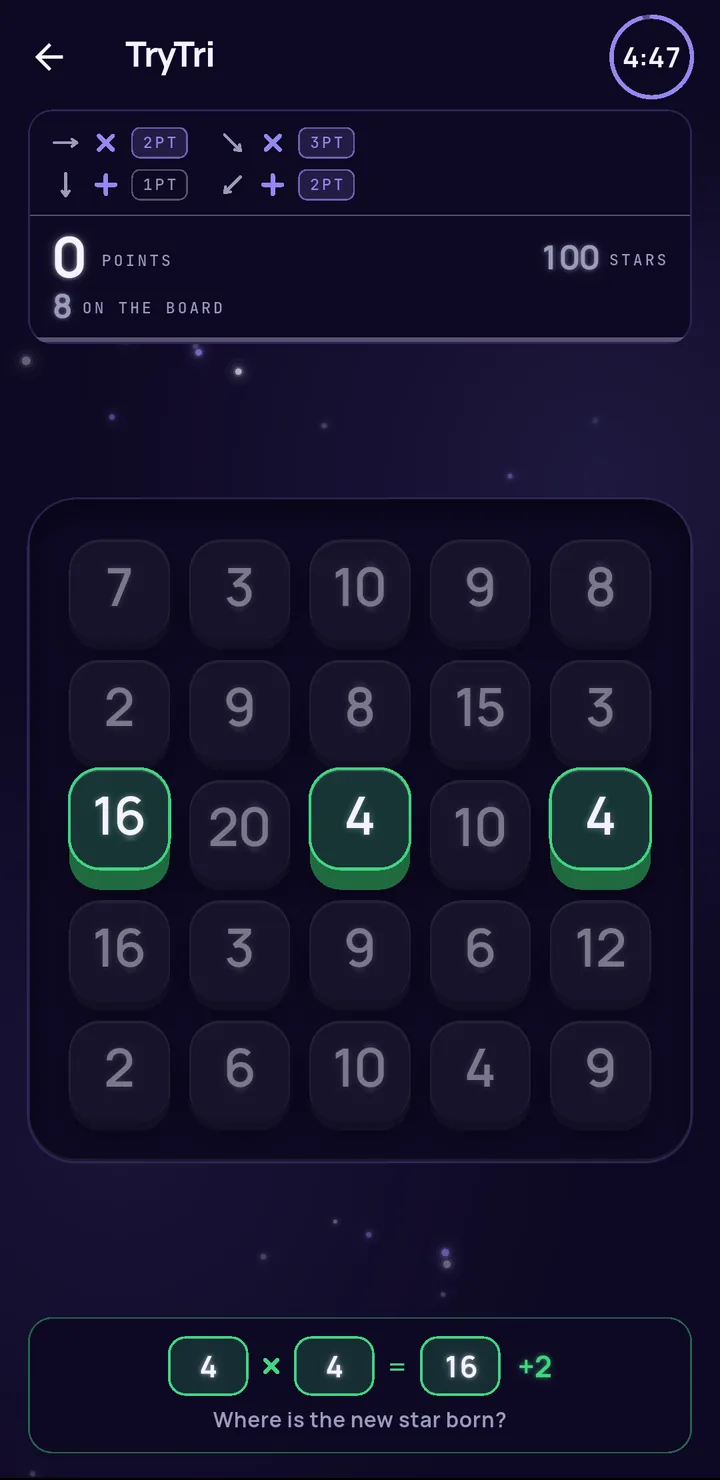
Find three in a line that work, like 4 × 4 = 16 across. Any order, and they need not touch. Claim them, then pick where the next number lands.
Play solo against the clock, or race a bot or a friend until the numbers run out.
- Time
- Boards of 5 × 5, 7 × 7 or 10 × 10. Race for 3, 5, 7 or 10 minutes, or Long with no clock. Or take turns, 15 seconds each.
- The end
- When the numbers run out. Most points wins.
One claim
- Read the bar at the top: on this board across is ×, worth 2 points.
- The third row holds 16, 4 and 4. In any order: 4 × 4 = 16.
- Tap the three. The line lights up green: +2.
- Pick which of the three squares gets a new number. Pick well and it finishes another line.
In the app
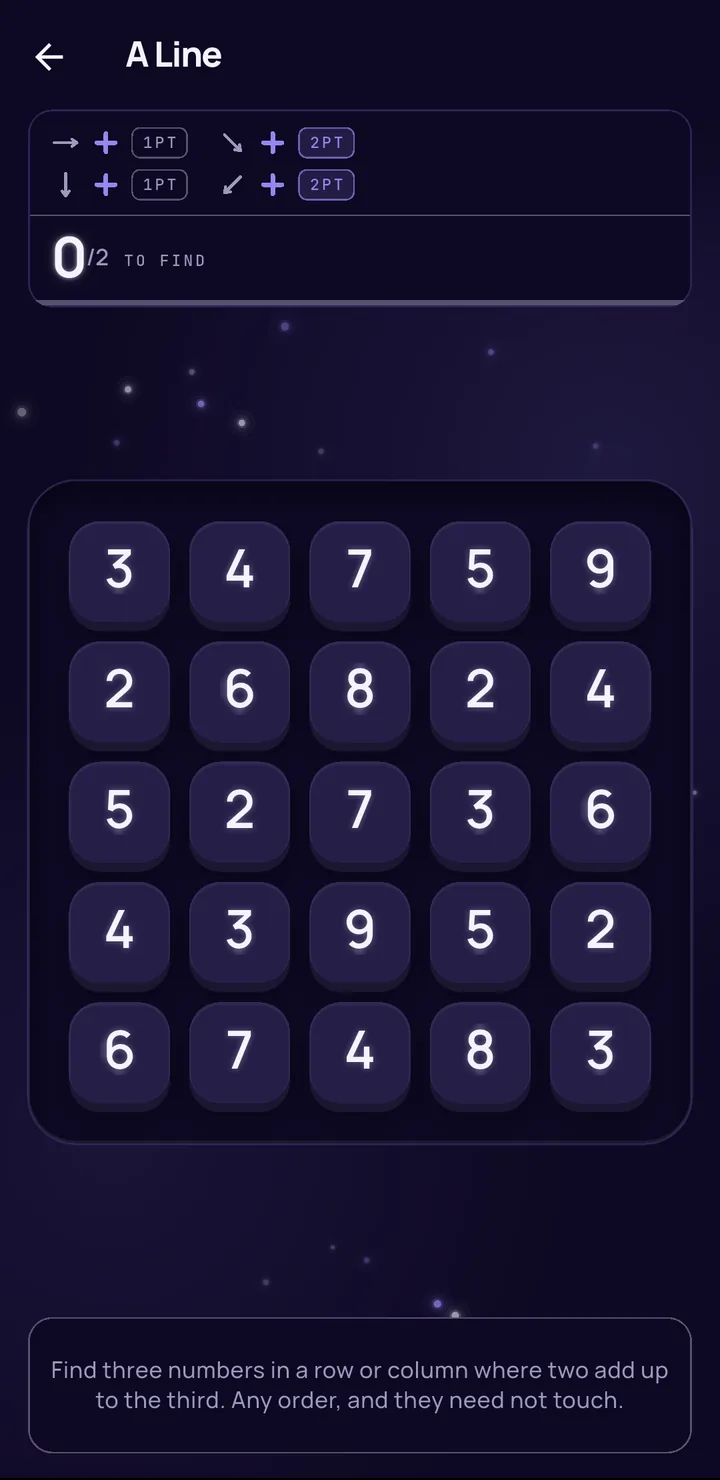
A Line, the first of six lessons. 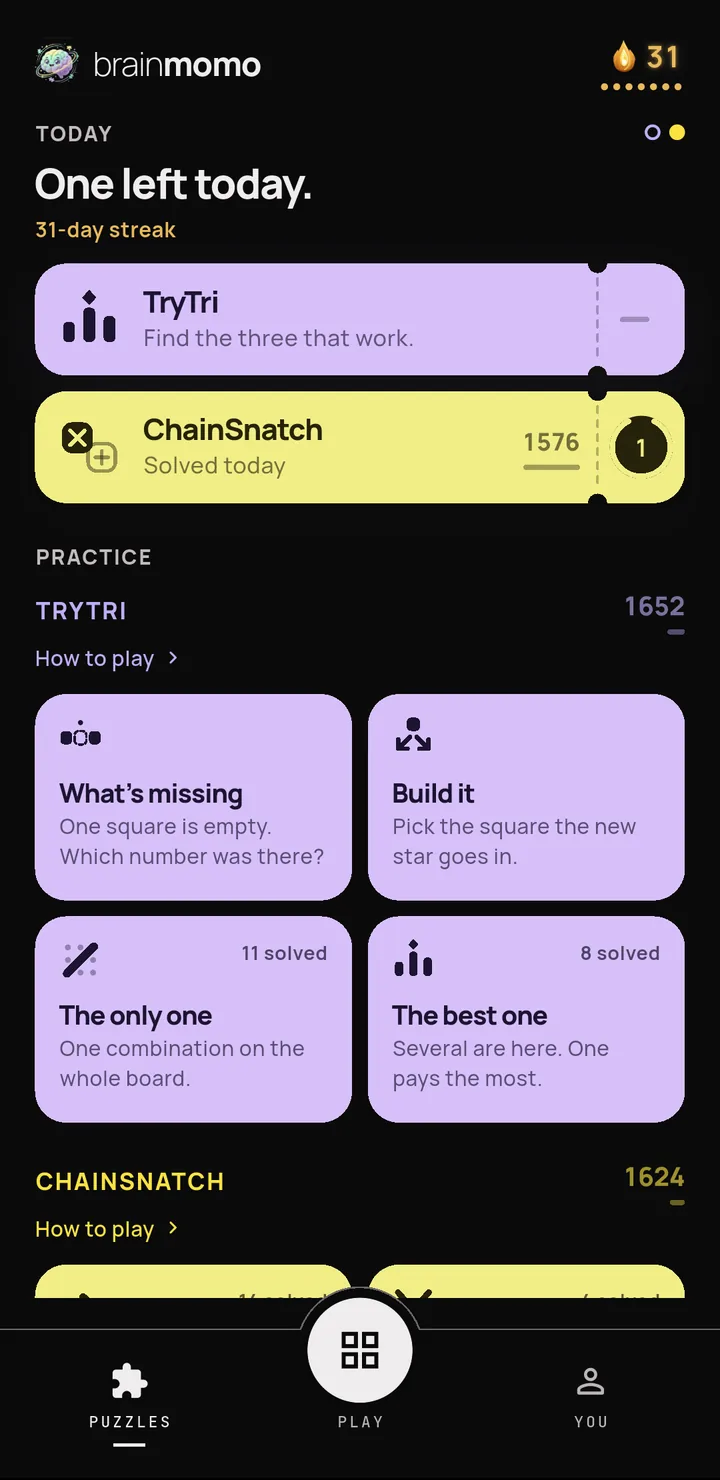
Practice themes, near your level.
Learn it
Six steps, one rule each. Take them in order.
- A Line
- The Collapse
- Two Paths
- The Diagonal
- What It Pays
- Build One
Puzzles
One board, one right answer. Four themes, picked near your level, and a daily that everybody gets the same.
What's missing
One square is empty. Which number was there?
Build it
Pick the square the new star goes in.
The only one
One combination on the whole board.
The best one
Several are here. One pays the most.
The bots
From the gentlest to the sharpest. Beat one to win its crown. They play offline.
Dust
Barely moves, and waits a long while between claims.
Mote
Slow, and takes whatever it finds first.
Comet
Keeps a steady pace and looks for strong combinations.
Pulsar
Fast and steady from the first claim to the last.
Nova
Reads the whole board and finds the strongest move.
Questions
Which board should I start with?
5 × 5. It has fewer numbers to read, so lines are easier to see. 7 × 7 is the usual game, and 10 × 10 is a long hunt.
Do the three numbers have to be next to each other?
No. They have to be in one row, column or long diagonal, in any order.
Why do some directions pay more?
Each direction has its own sum and its own points, shown on the bar at the top. The harder sums pay more.
The other two
Coming soon Android first.